
A green choice, not a green wave: sustainability has become a segment topic
Between 2019 and 2022, more than half of all forecourt shoppers said at times that sustainability entered their purchase decision. Anyone who read that as a mandate to rebuild the shelves across the board is looking at a sobering set of numbers today. The time series of the B&G Shopper Monitor Tankstelle from 2007 to 2024 tells a more useful story: sustainability has arrived in convenience retailing as a segment topic with a clearly identifiable target group.
Seventeen years, the same question, the same places
The B&G Shopper Monitor Tankstelle has run as a multi-client study since 2004. Around 2,500 shopper interviews a year at the point of sale, complemented by a survey of forecourt operators and a representative population survey. The value sits in the constancy: a time series from 2007 to 2024, measured with the same question in the same places and in the same situations.
That curve has a shape. Until 2018 sustainability played a supporting role at the station, visible in the debate and rare in the basket. Between 2019 and 2022 the share of shoppers factoring sustainability into their purchase decision rose above 60 per cent at times. It then eased back as energy prices, inflation and a closer look at the till receipt claimed the attention.
A single reading would have declared each of those phases a trend. Only the series separates the cycle from what remained. And what remained is a group that can be described precisely.
What has shifted since 2023
When we wrote here in 2023 about sustainability at the pump, the subject was willingness: reusable cups, vegan alternatives, gaps in the range. The guiding question was how green forecourt customers wanted to be.
Three years on, a different question is on the table. It asks who exactly buys green, which mission that person is on, and what ends up in the basket alongside. A question of attitude has become a question of segmentation. That is the progress: attitude is hard to run a category on, a segment is straightforward.
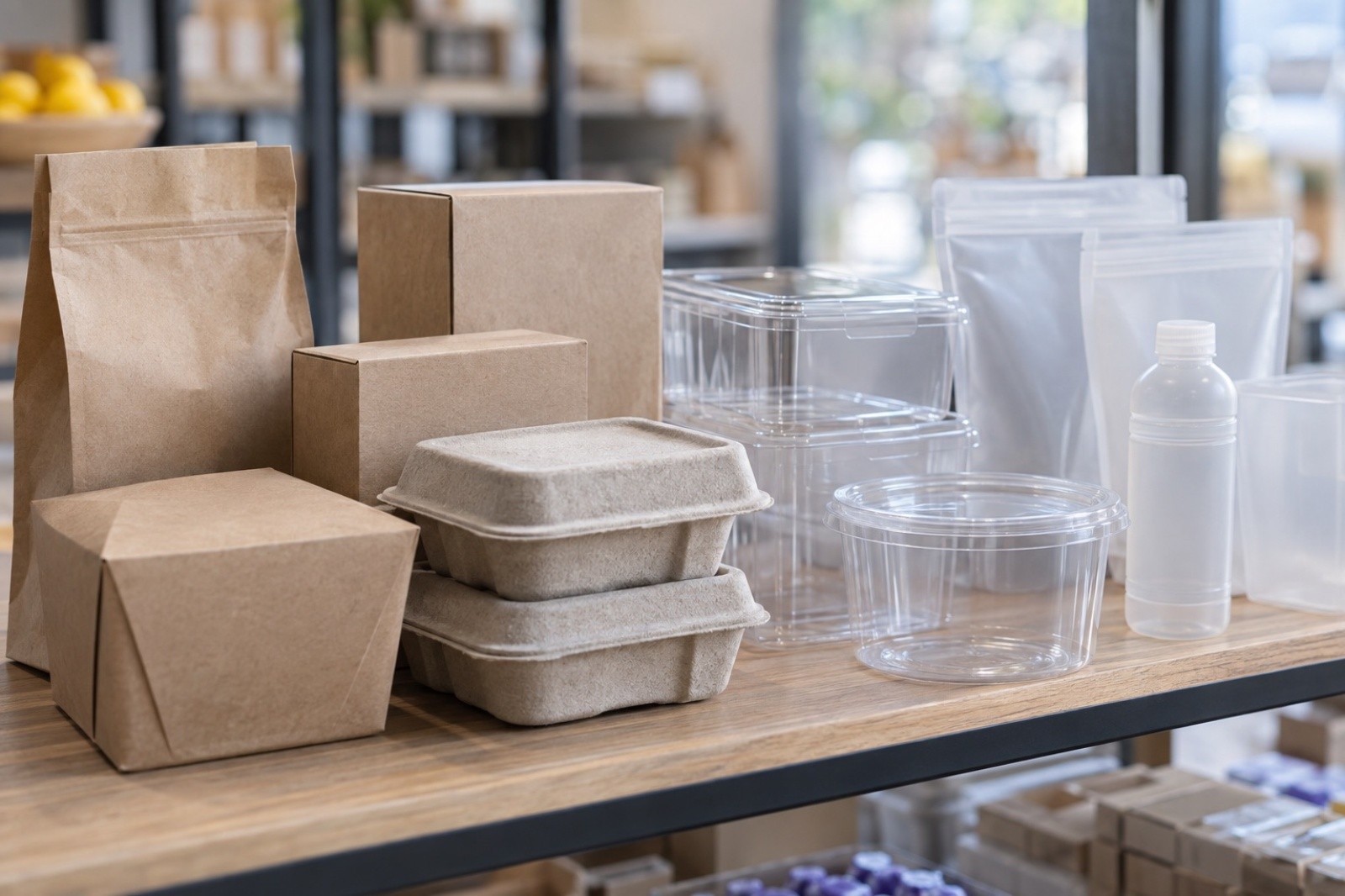
Packaging carries the topic, the range follows
83 per cent of Convenience Lovers rate sustainable packaging solutions as important. That is the strongest single reading in the whole field, and it sits in a telling place: on the wrapper, on the thing the shopper actually holds while leaving the shop.
For the sales floor that is the good news. A packaging solution works across an entire category, whereas one sustainable line item works across its own facing alone. Address the cup, the lid and the snack tray, and you reach the segment while keeping the number of SKUs stable. On 60 square metres of selling space, that is the difference between margin and shelf cosmetics.
The regulatory frame pushes the same way. Germany's reusable-offer obligation has expressly covered forecourts since 2023, caps have had to stay tethered to beverage containers since July 2024, and the single-use plastics fund has priced material by weight since 2025: 1,236 euros per tonne for beverage cups and 177 euros for food containers. From 12 August 2026 the core requirements of the PPWR follow, with service packaging for to-go sales expressly included. Packaging has become a cost line with a logic of its own, and it is at the same time the point where the segment responds.
A segment is shelf space with an address
Roll the theme out broadly and you pay for shelf metres with gross margin. Willingness to pay for sustainable alternatives holds up inside the segment and thins out beyond it. Placement therefore decides whether the same product delivers contribution or write-offs.
In practice that means three things. First, define the target group by shopping mission and basket rather than by demographics. Second, place where that mission already runs, coffee and foodservice first, as one visible block rather than scattered across the shop. Third, measure the effect properly, with a baseline reading, test stores, a control group and sell-out data. Otherwise all that remains at the end is the assumption that the theme worked.
The claim itself deserves care. From 27 September 2026 the rules of the EmpCo directive apply, and blanket statements such as "climate neutral" will then require evidence. Anyone commissioning signage, shelf stoppers and pack artwork today does well to plan for that straight away.
Outlook: attitude becomes craft
Sustainability in the forecourt shop has the phase of large expectations behind it and the phase of quiet arithmetic ahead. The segment is small enough to miss and large enough to earn from. What is usually missing is precision: which customers, which category, which space, which proof.
That is what a time series is for. How your category moves inside it is something B&G managing director Reiner Graul is glad to walk through in person.