
When the impulse purchase becomes a meal
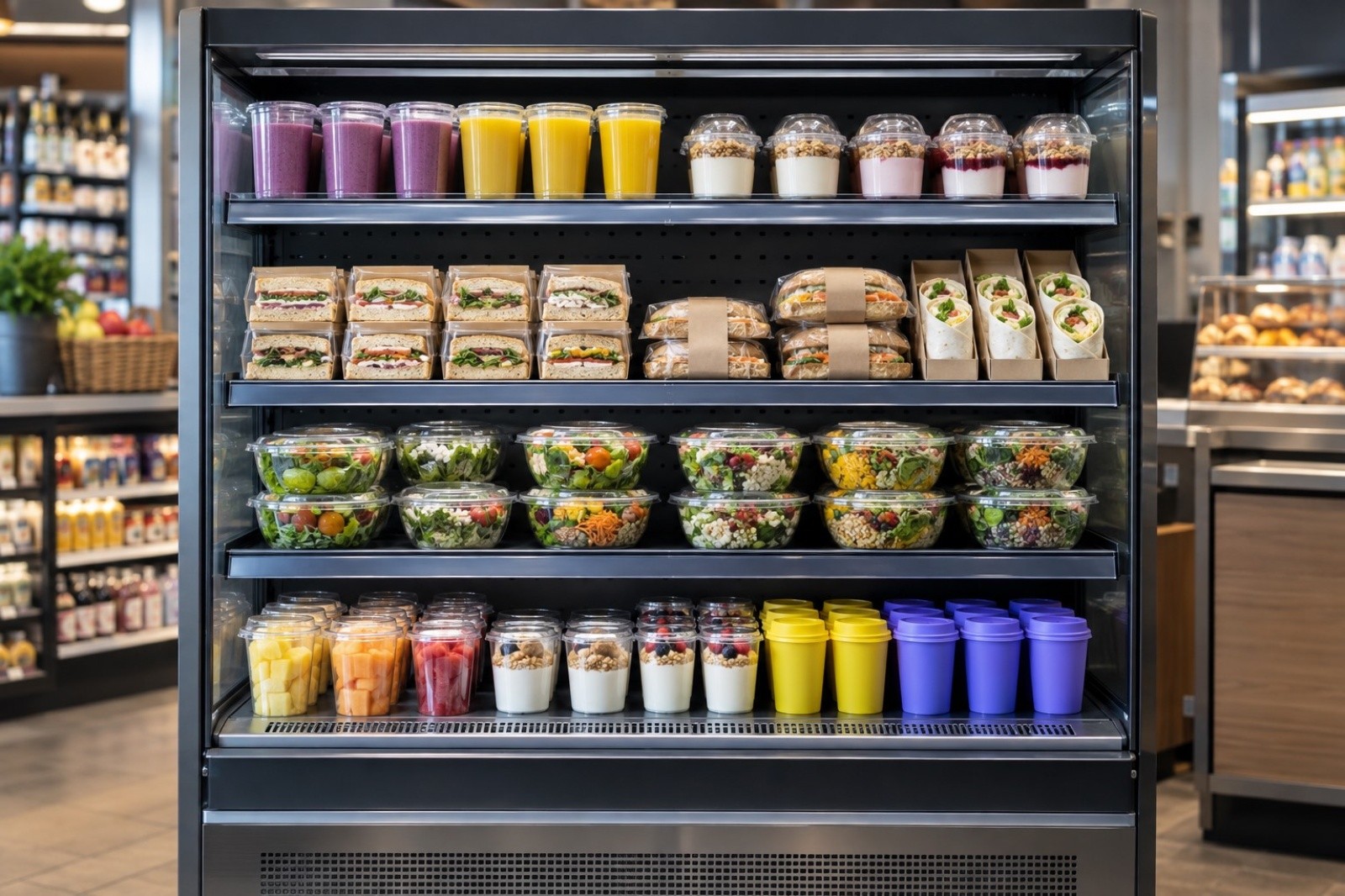
The chocolate bar for the journey has company. More and more shoppers leave the forecourt shop with a pasta bowl, a filled roll and a coffee, in other words with a complete meal. The German trade title Convenience Shop described exactly this shift in its cover story of 24 May 2025.
Three expectations of a single purchase
The figures come from the 2024 Nutrition Report published by the German Federal Ministry of Food and Agriculture. Taste matters to 99 per cent of respondents, health to 91 per cent, climate and the environment to 84 per cent. 54 per cent want more variety while they are out and about, and 39 per cent reach for vegetarian or vegan options more often than before.
Classic impulse merchandise served a single expectation: within reach, sweet or salty, ready to eat straight away. The mini meal is asked to do more. It should fill you up, suit the time of day and hold up against the shopper's own standards. That makes it a different purchase, even though it happens in the same shop.
The decision moves from the till to the chiller
As long as a snack was an add-on to refuelling, the decision was made where the shopper was standing anyway: in the checkout zone. Seconds, eye level, block placement, done.
The mini meal follows a different logic. It is searched for, compared and checked, with an eye on date, ingredients, portion size and price. The impulse purchase therefore moves to the chiller and to the in-store food-to-go counter, the two places with the longest dwell time in the shop.
For space planning, that is the real point. The route to the chiller becomes the most important route in the shop, and the checkout zone hands over its role as the single home of impulse. Anyone who still plans the range outwards from the till is planning past the decision.
A metre of chiller carries different costs from a metre of shelf
Fresh food asks for more than space. Energy, write-offs and a use-by date that dictates the selling day belong to it, as do preparation, seating, packaging and waste. Since 2023 German law has also required outlets to offer a reusable alternative for food and drink to go, forecourts explicitly included.
The floor area of the shop, meanwhile, stays exactly as big as it was. Every additional facing of fresh food is created at the expense of another category, usually confectionery, soft drinks or non-food. A range question turns into a space question.
It can be answered as soon as value and volume per shelf metre and per chiller metre are on the table, and as soon as it becomes visible how much of the food-to-go turnover is genuinely incremental and how much has simply migrated from the confectionery secondary placement.
What can actually be measured at the point of sale
This is precisely where Bormann & Gordon works. Since 2004 the B&G Shopper Monitor Tankstelle has combined shopper interviews at the point of sale, a survey among forecourt operators and a representative population survey. It shows which shopping mission enters the shop at which hour of the day, and what the shopper genuinely expects to find there.
POS audits add the view from the shop floor, with around 30,000 store visits a year: availability, execution of agreed placements, traffic routes, customer flow and dwell time.
How much a new food-to-go concept really delivers is settled by a controlled store test. A baseline measurement, test stores against a comparable control group, analysis based on scanner data: only that design separates genuine incremental sales from cannibalisation, and turns an assumption into an argument for the annual negotiation.
The floor plan decides as well
Snackification is less a trend in the range than a shift in the floor plan. A shop that sells a meal in 2025 needs refrigeration in the right place, a counter with a short wait and an assortment that looks different at lunchtime from the way it looks at seven in the morning.
Operators and brand owners who know their traffic hours, their traffic routes and their margin per metre take that decision with figures in hand. Reiner Graul, managing director of Bormann & Gordon, is glad to talk through how such a measurement is set up.