
Cappuccino still rules, and that is the good news
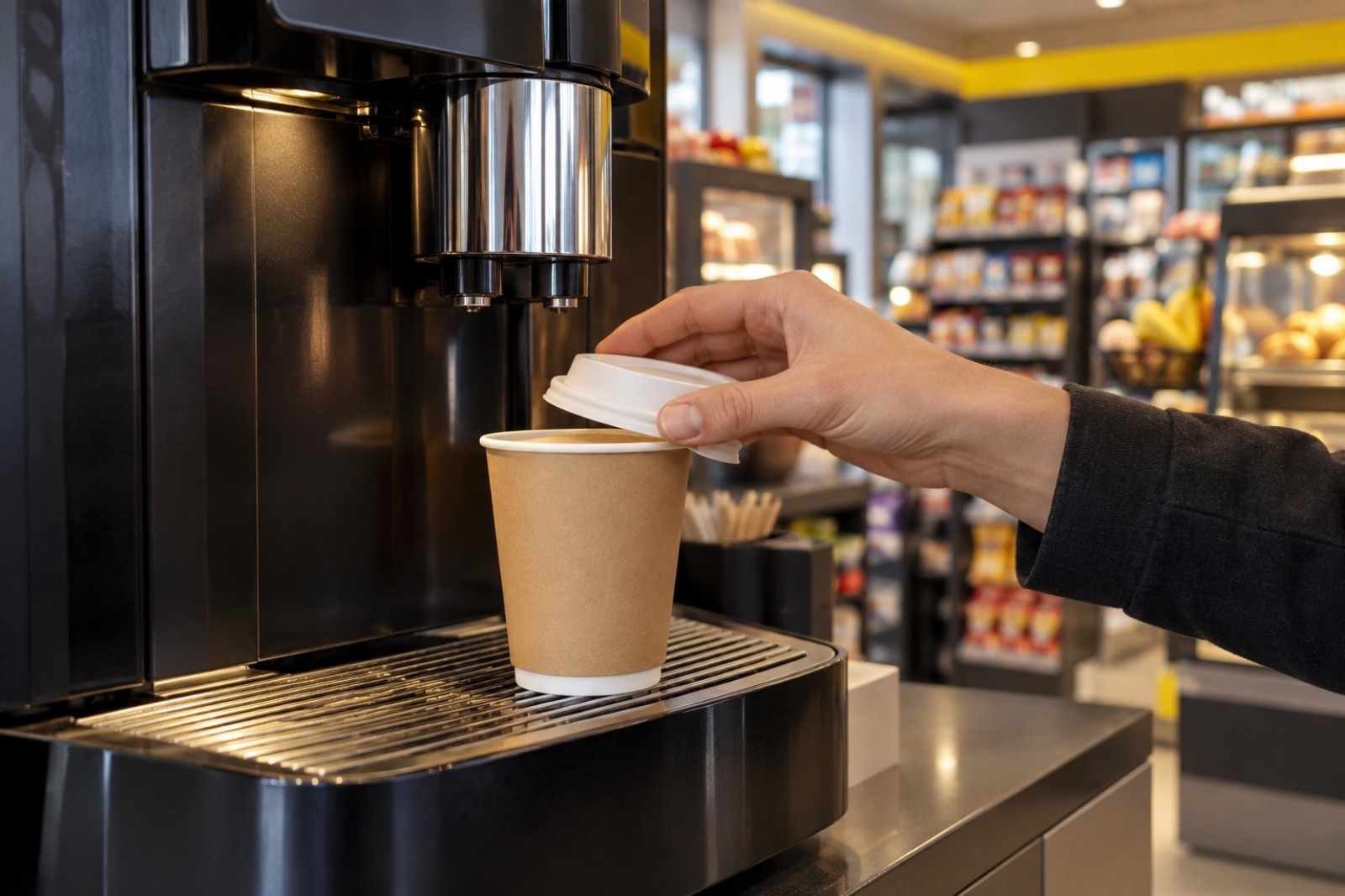
A new coffee study from Aral confirms what operators watch happening at the machine every day: the cappuccino remains the most popular coffee to go on the forecourt. In a channel where ranges, ownership and regulation keep shifting, that steadiness is a gift.
It moves the work to where it actually earns money: away from the recipe and towards everything that happens around the cup.
Stability is a commercial quality
Coffee is the most dependable profit driver in the forecourt shop, precisely because preference barely moves. Cappuccino, latte macchiato and café crème have held their positions for years. Anyone planning a range can count on that.
In March 2025 the German Coffee Association reported per capita consumption of around 163 litres, whole bean up two per cent and out of home consumption up one per cent. That is a floor rather than a boom. Floors, however, are exactly what a shop can budget against.
And that is where the temptation sits. A category that runs by itself invites experiments: new varieties, new price logic, a new generation of machines. Touch it, and you touch the contribution margin of the whole site. The real lever sits elsewhere.
The lever is waiting time
The customer chooses the cappuccino before opening the door. What happens afterwards decides the basket. Is someone already at the machine, is the grinder running, is the milk container full, how long is the queue at the till?
Every one of those seconds can be measured. Bormann & Gordon records footfall and dwell time at the point of sale using light barriers and 3D cameras, anonymously and without any recording, and adds around 30,000 store visits a year. Together these produce a picture the till alone will never deliver: where the shopper stands, how long he stands there and what holds his eye.
Waiting time cuts both ways. Too long, and the customer leaves without coffee. Used well, it is the one moment in the shop when a person willingly stands still and looks around. Those seconds are among the most valuable contact zones on the entire site.
The cup is a cost centre and an advertising space
Since May 2025 operators have reported their volumes to the German single use plastic fund. For beverage cups the levy stands at 1,236 euros per tonne. That changes the arithmetic of a category whose packaging used to be treated as a given.
In parallel, Berlin has been testing since April 2025 how reusable takeaway packaging can gain ground. For the shop this means the reusable cup moves out of the sustainability chapter and into the commercial one. It also carries an opportunity that often goes unnoticed. A cup that leaves the site takes the logo to the place where the next purchase impulse forms.
In the end the add-on purchase decides
The walk from the machine to the till is the shortest and the most expensive stretch in the shop. A shopper who picks up a croissant, a bar or a sandwich on the way doubles the basket. A shopper who passes empty shelving with a cup in hand has bought coffee and nothing else.
Shell sharpened its shop business in this direction in July 2025, placing coffee, snackification and a tightened range under the idea of food for now. The German nutrition report supports that direction: 54 per cent of respondents want variety while on the move. The meal is breaking up into occasions, and coffee is the occasion with the highest frequency.
Whether an add-on purchase follows depends on placement and sequence. Is the bakery display in front of the waiting customer or behind him? Does the snack sit at eye level, or in the checkout zone where everything else already competes for attention? The B&G Shopper Monitor Tankstelle has been asking these questions since 2004, with around 2,500 customer interviews a year taken directly at the point of sale and complemented by the operators' own view.
What operators can take from this
The good news in the Aral study is how dull it is. As long as preference stays stable, every investment in the shopper's route pays twice over, because it works across years rather than a single season.
Three questions are enough to begin. How long does your customer really wait? What does he see during that time? And what sits between the machine and the till, within reach of his free hand? Those answers can be measured, and we are happy to talk about how it looks at your sites.